How Sustainable Landscaping Can Transform Your Yard This Spring
You have your spring ritual dialed in. As soon as the weather warms up, you walk outside, eye the yard, and feel inspired to spruce things up. But then your motivation hits a wall. The project either feels too massive to tackle on your own, or you find yourself paralyzed in the garden center, asking Google for advice.

Photo Credit: Forever Green
Why does it feel like a great-looking yard is something other people have mastered, while you’re still waiting for your green thumb to kick in?
Colton Bean knows the frustration well. As a project manager and designer at Sustainable Landscape Solutions in Iowa City, he helps homeowners who feel stuck or overwhelmed create beautiful landscapes.
Iowa’s climate and soil aren’t the obstacles many homeowners assume they are. Once you understand what grows here, a yard that looks great and doesn’t take up your weekends is well within reach.
We asked Colton for his best sustainable landscaping tips for boosting curb appeal. The self-proclaimed plant nerd shared some of the advice he gives homeowners when they aren’t sure where to start.
Iowa’s Naturally Sustainable Landscaping
Colton works in sustainable landscaping, an environmentally friendly practice built around plants that, once established, largely take care of themselves. You spend less time watering, less time maintaining, and less money replacing plants that aren’t suited to Iowa’s climate.

The prairie that covered Iowa before European settlement was already a low-maintenance system. These plants were tough, drought-tolerant, and adapted to our freeze-thaw cycles and clay-heavy soil. Many are still thriving and easier to care for than the ornamental alternatives you find at the big garden centers.
And you don’t need a prairie in your front yard to get the full benefit of Iowa’s native plants. You can make your yard more resilient by choosing species built to take care of themselves.
Spring Yard Maintenance 101
Spring yard maintenance starts in the fall. If you’re used to cutting everything down as soon as the first frost hits, Colton suggests hitting the brakes.
Spring is the best time to cut back dead growth. Plants hibernate in the winter, and the leaves and foliage left around them act as free insulation, protecting root systems from the worst of Iowa winters. If you strip that away in October, you’re leaving your plants exposed. Leftover foliage also shelters overwintering insects, which play a vital role in what shows up in your garden come summer.
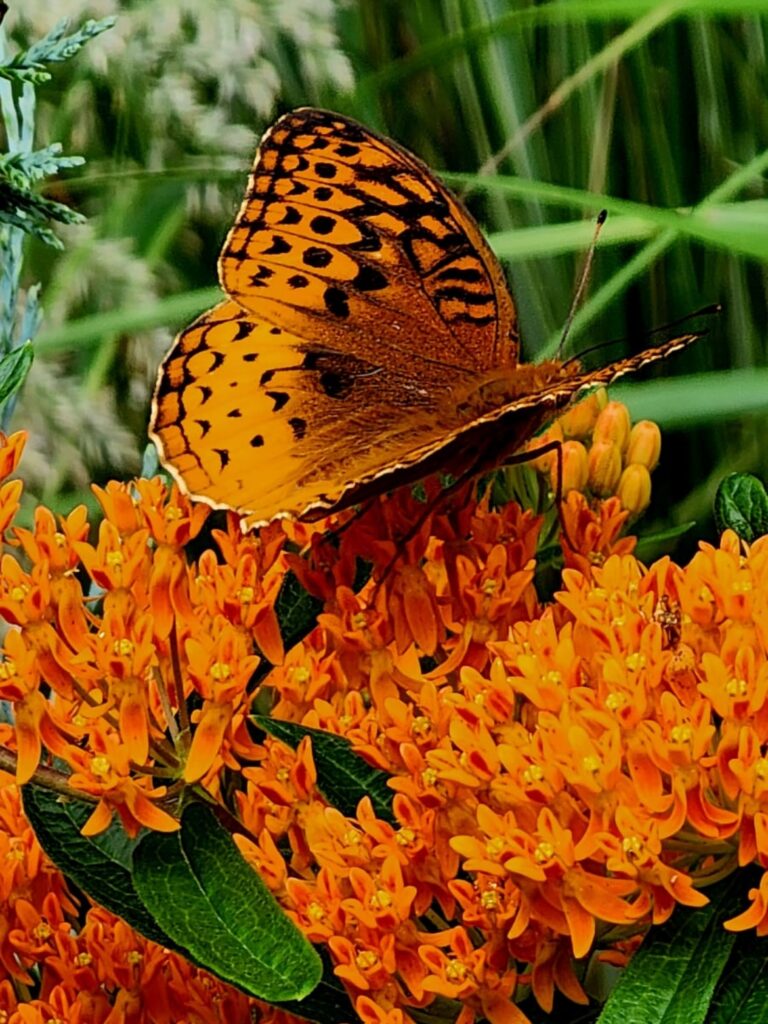
Photo Credit: Sustainable Landscape Solutions
Many homeowners also battle Iowa’s clay soil. Though it’s dense, hard to dig, and drains poorly, Colton says it’s not the enemy many homeowners believe it to be. Clay holds many nutrients, so it’s better to work with it than remove it completely.
When you’re planting, dig out what you need to, mix in natural compost to loosen things up, and add organic material. You’ll give your plants a better chance to thrive.
“If you amend the soil well and take care of the plants you put in, you’ll usually be fine,” Colton said.
The Best Plants for Iowa
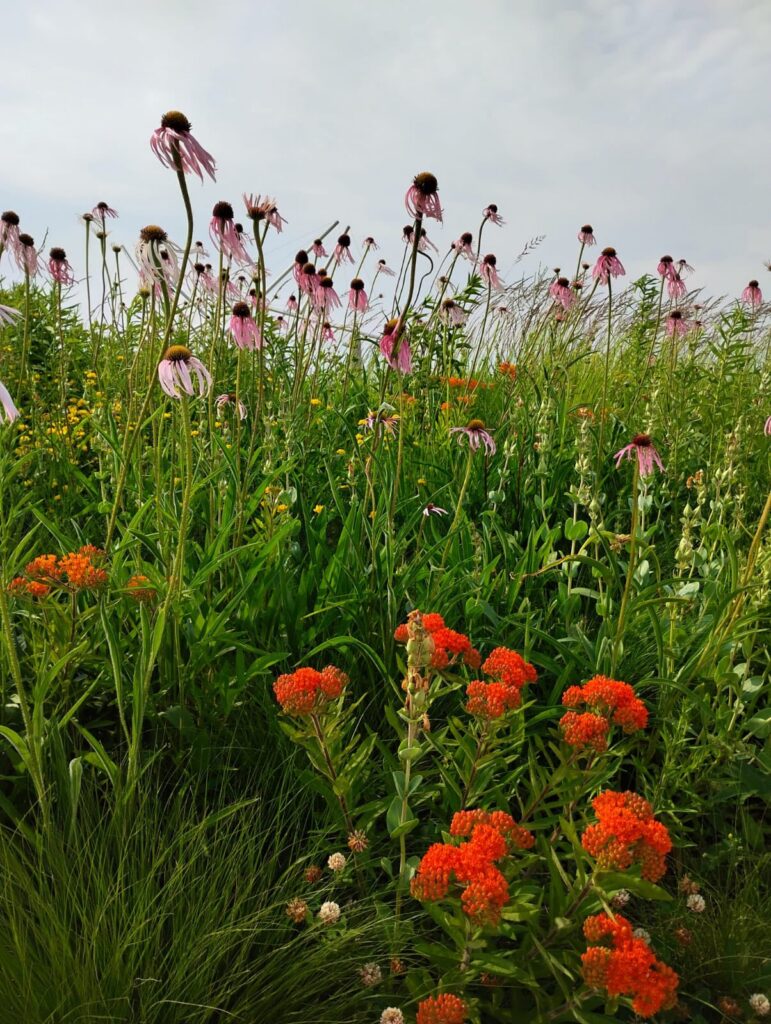
Photo Credit: Sustainable Landscape Solutions
Walking into a garden center and trying to choose between annuals and perennials is enough to give anyone plant paralysis. The easiest solution is planting perennials. They come back year after year, and after the first few growing seasons, they’re largely established and self-sufficient. On the other hand, annuals and non-native plants need more babying and more watering.
Colton has a list of plants he returns to again and again for Iowa yards.
- Coneflowers: These plants do exceptionally well in Iowa and attract both birds and beneficial insects.
- Winterberries: Excellent for winter landscapes, winterberries are tough and adaptable.
- Serviceberries: These berries earn their place with ornamental value, edible fruit, and beautiful fall color.
- Black-eyed Susans: Hardy and bright, these native wildflowers bloom reliably from midsummer into fall with almost no attention.
- Hypericums: Known for their cheerful yellow flowers, hypericums add multi-season interest without a lot of fuss.
- American Hornbeams: An understory tree with striking muscle-like bark and vibrant fall color that works well in smaller yards.
- Junipers: Evergreen and drought-tolerant, junipers provide year-round structure and hold up well in Iowa.
- Catalpas: Big, bold, and a little wild-looking, catalpas bring character to a yard with heart-shaped leaves and showy spring blooms.
- Oak trees: Iowa’s state tree is slow-growing, but deeply rewarding.
One plant he steers clients away from is the burning bush. It’s everywhere in Iowa, but it’s an invasive species. Better alternatives with similar visual appeal include cranberry bush viburnum and arrowwood viburnum—both native and better for local birds and insects.

Photo Credit: Earl May
Other native Iowa plants to consider:
- Butterfly weed (aka butterfly milkweed)
- Wild bergamot (aka bee balm)
- Prairie blazing stars
- Wild petunia
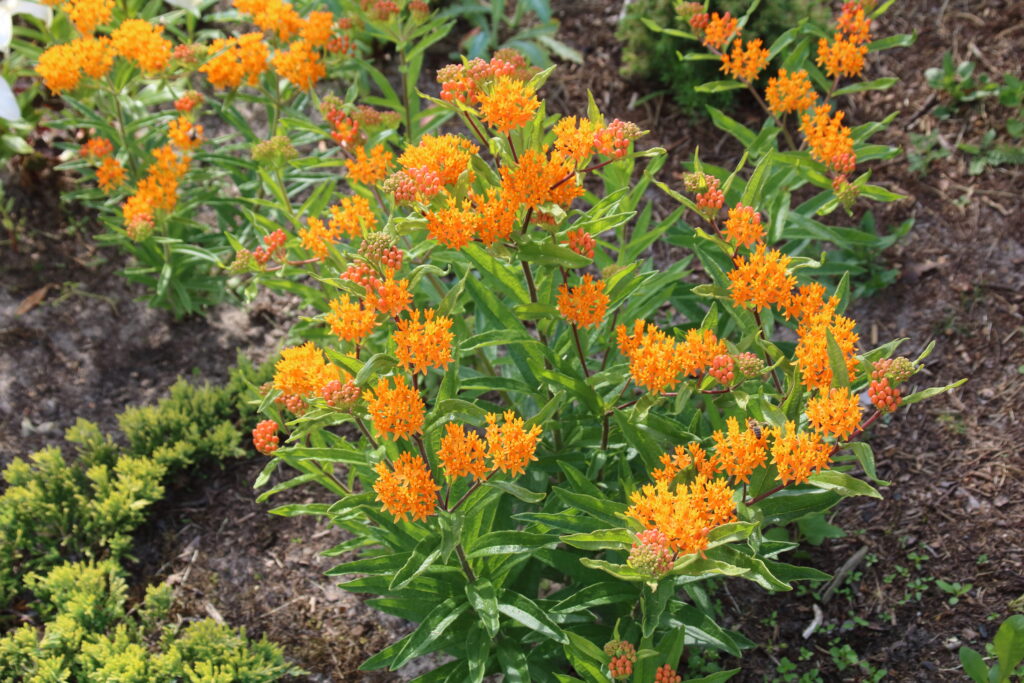
Whenever Colton is helping someone with their landscape design, he considers the style of the home. For example, a ranch-style house pairs naturally with plants with similar character: exfoliating bark or defined structure, like birches or American hazelnut. The landscape should feel like it belongs to the house.
High-Impact Curb Appeal on a Budget
If you’ve got a free Saturday and $200 to spend, Colton’s advice is to start at a local nursery like Forever Green in Coralville or Iowa City Landscaping & Garden Center. Local nurseries grow plants suited to the local climate, and they’ll give you free advice on what will do best in your yard. Bigger garden centers carry plants that look great in the store, but many struggle in Iowa’s conditions.

Photo Credit: Sustainable Landscape Solutions
Before you check out, think about what you’re working with. What color is your house? What’s the architectural style?
Colton uses the color wheel for inspiration. If you have a dark blue house, it would really pop with orange, bright yellow, or chartreuse. If your house is white, your options are practically unlimited.
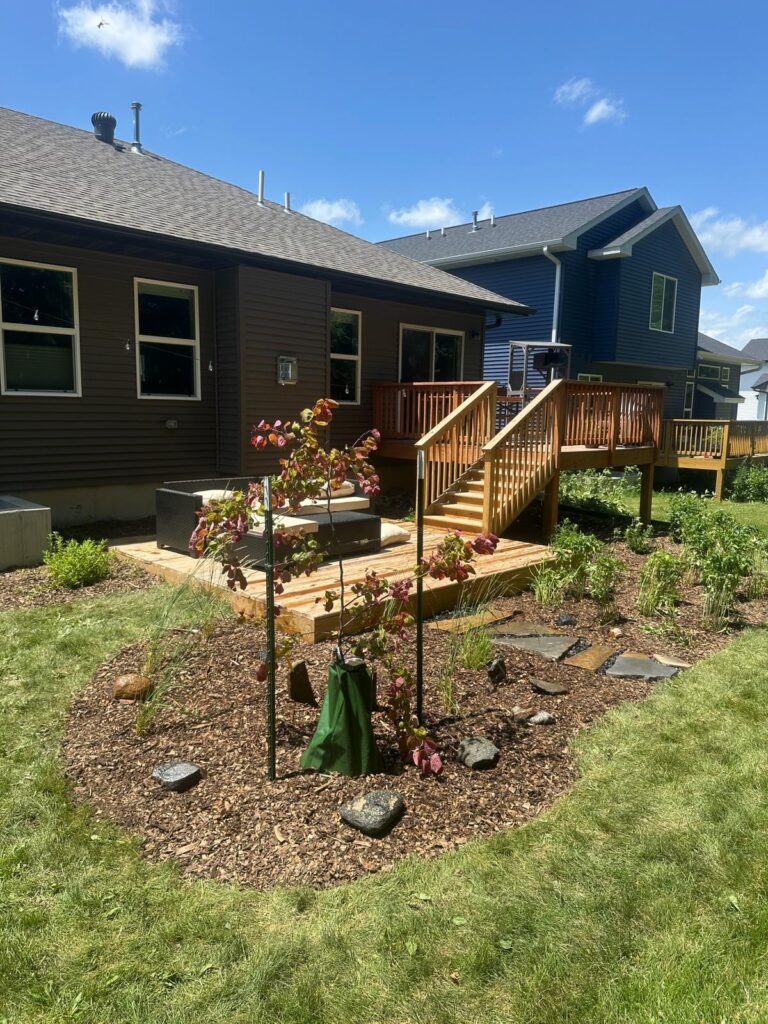
Photo Credit: Sustainable Landscape Solutions
He’s also a big fan of stone, especially limestone. Accent rocks can complement a home’s exterior in a way mulch can’t. Tan and white landscape rock looks clean and finished in most yards. But you’ll want to avoid black, which absorbs heat and can feel too dark and heavy in a landscape.
Mulching is one of the most popular spring projects, but Colton sees many homeowners make the mistake of adding landscape fabric underneath. After a few years, a new layer of soil builds up on top of the fabric, and you’re right back to weeding. Only now, you have a plastic barrier under everything.

Mulch should sit directly on the soil, where it can insulate plants, retain moisture, and break down into nutrients over time. And if you’re building out a planting bed, incorporate ground cover into your plan. Not only does it suppress weeds, but it also reduces how much you need to buy each year.
Colton sees many homeowners struggling with low spots and drainage in their yards. A rain garden is a great solution if you have a spot that keeps filling with water. Some cities in Iowa (including Iowa City) offer funding for sustainable projects like rain gardens, and once established, rain gardens take care of themselves.
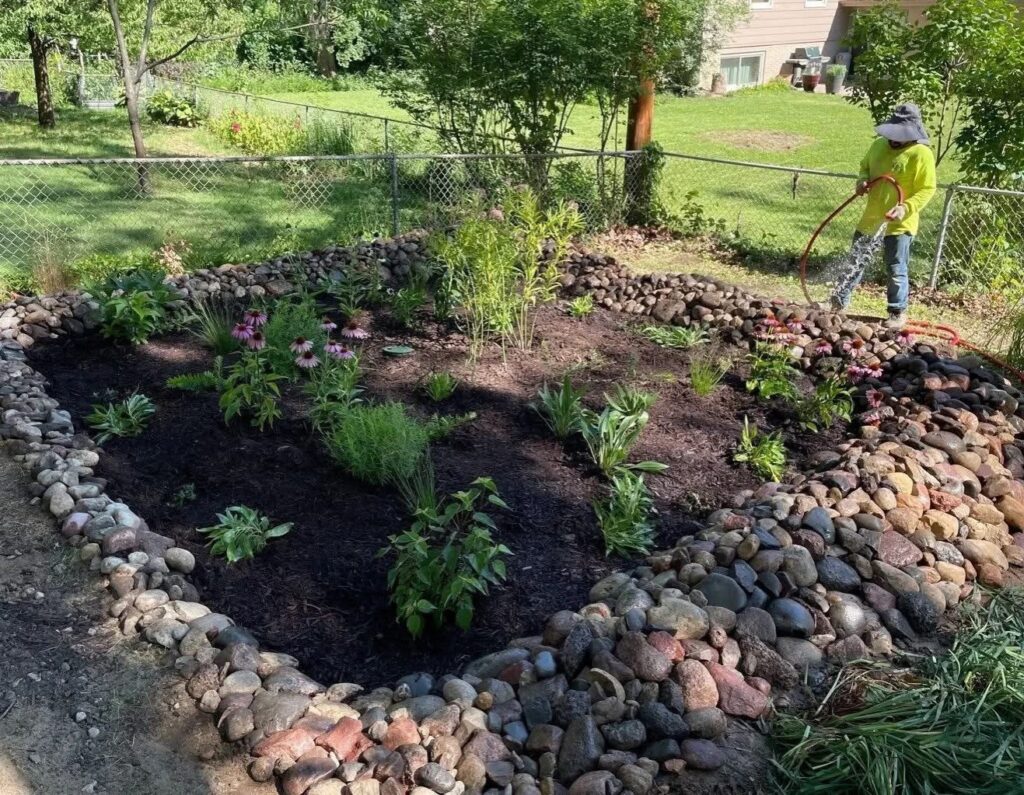
Photo Credit: Sustainable Landscape Solutions
When to Call a Landscaping Pro and What to Ask
Colton has a great rule of thumb he shares with homeowners: HARDscaping is HARD, so get help.
Soft landscaping—plants, mulch, and ground cover—is attainable for most DIYers. Hard landscaping like retaining walls, irrigation, elevated patios, and contour work requires equipment, labor, and knowledge of local ordinances. That backyard fireplace you’ve been dreaming of? It has to be a set distance from your home.

Photo Credit: Sustainable Landscape Solutions
If you’re hiring a landscaper for the first time, look for someone willing to help you think through what you want before the project starts. A good landscaper will ask what you’re trying to achieve, help you visualize it, and offer an honest estimate before they get to work.

Photo Credit: Sustainable Landscape Solutions
Many people wonder what they should budget for a landscaping project. Colton suggests thinking about landscaping as a percentage of your home’s value: usually 10-20%.
Let’s say your home is worth $500,000:
- For a smaller refresh, like adding plants or creating a simple patio, plan to budget for around $50,000 (an industry average based on property value—but you can still make an impact for less).
- For a more substantial project, like a full backyard landscape with a retaining wall and patio, a realistic budget might look more like $50,000 to $100,000.
Done well, your landscaping investment often comes back to you, whether you’re selling in a few years or passing the home to your kids a few decades from now.
Where to Start on a Sustainable Landscaping Project
The question Colton hears most often isn’t about plants or mulch or soil. It’s “Where do I begin?”

Photo Credit: Sustainable Landscape Solutions
Colton recommends picking one thing, like a bag of mulch on a Saturday afternoon. Take a trip to your local nursery, and cut back what winter left behind. It might not feel like much, but doing a few simple things can help you build momentum, especially if you’re saving up for your dream yard.
Whether you’re preparing to sell or just want to pull into your driveway and feel good about what you see, you might not have to go all out to make that happen. Sometimes a single weekend project is all it takes to see your home in a new light.
Curious what your home is worth, curb appeal and all? Our agents know what buyers in the Iowa City-Cedar Rapids Corridor are looking for in the market.
Reach out before you’re ready to list, and we can make recommendations to help you get the most from your home sale.