ADU Rules Near Iowa City: What’s Guaranteed by State Law and What to Check Locally
The new Iowa ADU law made headlines when it took effect on July 1, 2025. For the first time, every single-family homeowner in the state has the legal right to add a secondary living space to their property.
But there’s a caveat: what you can actually build depends on where you live. While state law guarantees your right to build an ADU, your local municipality still controls the specifics—how big the unit can be, how close it can sit to your property line, and how long the permitting process takes.
In this post, we cover all the details about accessory dwelling units (ADUs), including how much it costs to build an ADU in Iowa. We also provide some tips on researching ADU rules for your Johnson County property, whether you live in Iowa City, Coralville, North Liberty, Tiffin, or Solon.
What Iowa ADU Law Already Guarantees
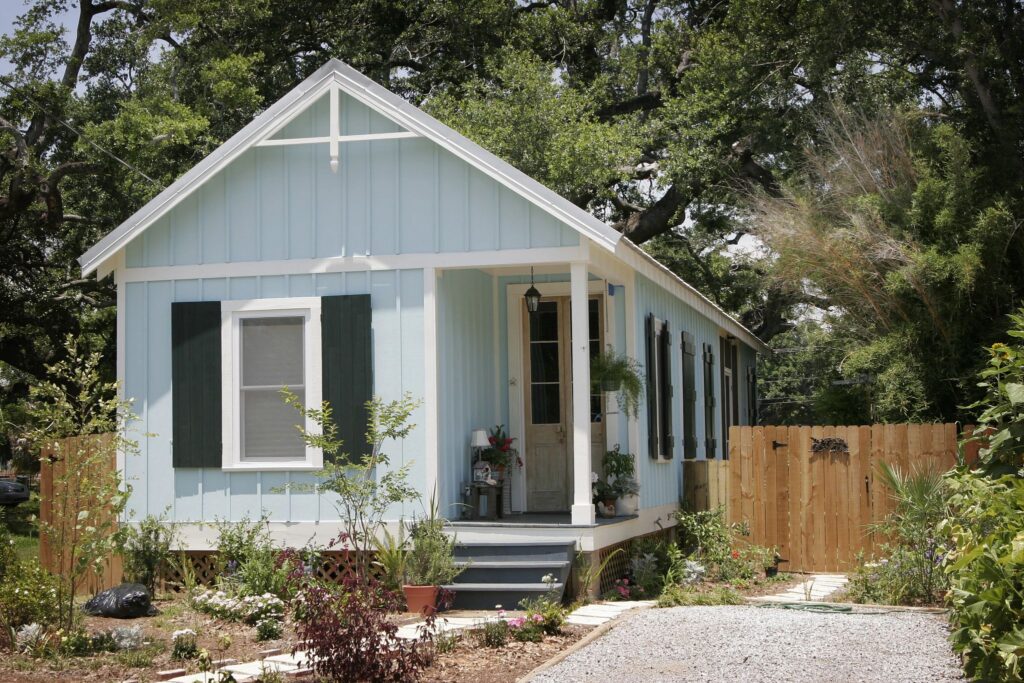
Photo Credit: AARP
Before we get into local city codes, let’s talk about what state law says. Under Senate File 592 (SF 592), signed by Governor Kim Reynolds in May 2025:
- Every single-family lot is eligible for at least one ADU. Your city has to approve the permit if you meet basic building codes—no rezoning, special-use permits, or planning commission hearing required.
- Your ADU is capped at 1,000 square feet, or 50% of your primary home’s size, whichever is larger. If your main house is 2,400 square feet, your secondary unit can go all the way up to 1,200 square feet. You can also build a new, larger home on your property and designate it as your primary residence, reclassifying the original structure as the ADU (as long as it meets ADU requirements).
- Cities are explicitly banned from forcing you to live on the property. You have the right to rent out the primary house, the ADU, or both.
- Local zoning can’t force the ADU to match your primary home’s exterior. That includes roof pitches, siding material, and architectural finishes.
- Your city can’t require additional parking beyond what’s standard for a single-family home.
- Cities are prohibited from forcing you to run entirely new, separate main utility lines out to the street. In most cases, you can tie right into your property’s existing public service connections.
However, cities can still regulate:
- Setbacks
- Building height
- Design review (within reason)
- Permitting processes
One important exception: If you live in an HOA community, the state law governs municipalities, not private covenants. Your Covenants, Conditions, and Restrictions (CC&Rs) may still restrict or prohibit ADUs regardless of what your city allows.
Before you start planning your ADU, be sure to check your CC&Rs.
Do You Need a Permit for an ADU in Johnson County?
Short answer: Yes. This applies whether you’re building inside city limits or out in unincorporated Johnson County. If you don’t get a permit, it can affect your ability to sell and may not be covered by your homeowner’s insurance. Plus, you’ll likely have to make costly corrections in the future to bring your ADU into compliance.
For properties within city limits, permits go through your city’s building department (more on that below).
For properties in unincorporated Johnson County or outside any city’s jurisdiction, permits are handled by Johnson County’s Planning, Development, and Sustainability (PDS) department.
Johnson County’s general permit framework provides some useful context for ADU planning. Detached accessory structures under 200 square feet don’t require a permit, but anything larger does. Garage conversions and renovations also need permits regardless of size.
The County currently enforces the 2024 International Residential Code, which sets baseline construction standards for any residential project.
Once you submit an application, permit review typically takes 5-10 business days. You then have 180 days to break ground from the time the permit is issued, and after work starts, you can’t suspend it for more than 180 days without an extension request.
What We Know About Local ADU Rules in the Iowa City Area
Local laws across Iowa are still catching up to the state’s new legislation. While a few cities updated their codes right away, others are still grinding through the process.
The details below reflect the information that’s publicly available as of spring 2026. Since local laws are moving targets right now, you’ll want to make a quick call to your local building department to confirm exactly what’s allowed.
Iowa City

Iowa City updated its ADU rules back in 2023, giving it a head start on the permitting process before the state stepped in. With Senate File 592 now in effect, the governing framework has shifted to state law, making the city’s existing infrastructure smoother and more well-defined.
You can build an ADU on any lot zoned for a single-family residence as the primary home. This includes detached single-family homes, attached single-family homes (zero-lot line properties), and duplexes.
Attached single-family units are fee-simple arrangements where each home sits on its own individual lot. That means each unit is independently eligible for an ADU, regardless of the number of attached units in the row. As long as your home is on its own lot, you can build an ADU. For duplexes, since both units share one lot, one ADU is allowed for that lot.
The city has cut out the red tape on permitting, meaning internal and detached units don’t need special hearings or discretionary reviews. You apply for a standard building permit through the city’s online Customer Self Service (CSS) portal, just like you would for any home addition. Other considerations like setbacks still apply based on your specific property.
It’s also worth noting a major recent victory for property owners: Iowa City historically forced landlords to live on-site to have an ADU, but the state’s 2025 law banned those owner-occupancy mandates. To comply, Iowa City stripped that requirement from its municipal code in early 2026. Today, you’re free to rent out both units if you choose.
Contact: Iowa City Neighborhood and Development Services; 319-356-5120; icgov.org
Coralville
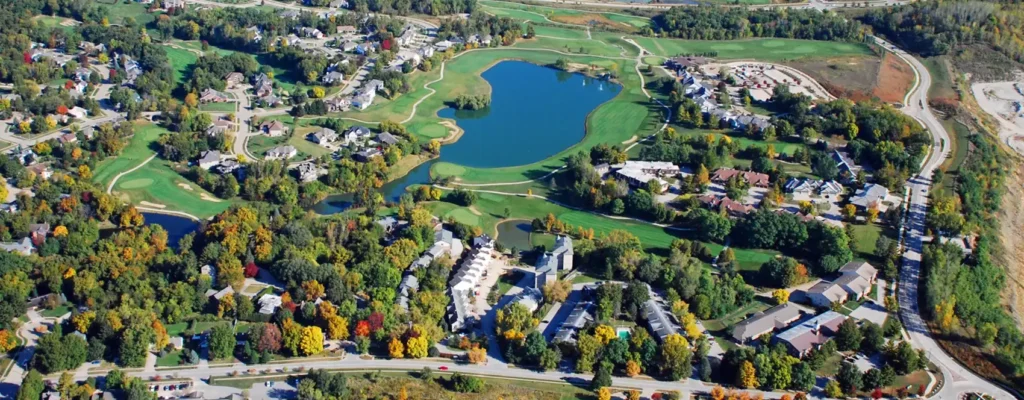
Coralville’s city website addresses accessory structures, including sheds, garages, carports, and pools, but hasn’t yet published a dedicated ADU ordinance page.
Currently, any detached accessory building over 200 square feet requires a building permit. Under the existing framework, a detached structure must sit at least six feet off the rear property line and maintain a five-foot buffer from your main house.
Side yard setbacks reflect whatever your neighborhood zone requires. While these aren’t ADU-specific laws yet, these exact dimensions will likely guide Coralville’s new ADU rules.
When you’re ready to get started, Coralville handles everything online. You can track nearby active projects and submit your own structural plans through the city’s permit portal.
As Coralville continues to define its ADU-specific guidelines, your best bet is to call the building department directly or search the online municipal code for ‘accessory dwelling unit’ to get the latest updates.
Contact: Coralville Building Department; 319-248-1700; coralville.org
North Liberty

As one of the fastest-growing cities in the Iowa City metro, North Liberty has seen a massive surge in ADU interest. The city spent late 2024 and early 2025 nailing down the specifics and got the official guidelines on the books, just in time for the state’s July 2025 rollout.
Key provisions include:
- Where you can build: You’re clear to add an ADU in any single-family (RS) zone. The city limits properties to one ADU per lot.
- Size limitations: Your ADU can’t exceed 1,000 square feet, or 50% of your home’s total assessed living area per Johnson County Assessor’s Office records, whichever is larger. The only catch is that your ADU can’t be larger than your main house.
- Foundation and placement: Every ADU must be built on a frost-protected perimeter foundation. Detached units must be standalone structures. They can’t be attached to or combined with any other structure on the lot. You can’t build within any utility, sewer, drainage, access, or walkway easement dedicated to the city or public use.
- Setbacks and height: These are governed by your specific zoning district. Check with the North Liberty Planning Department to confirm what applies to your lot.
- No extra parking required: North Liberty doesn’t force you to add a brand-new off-street parking space just for your ADU.
If you’re converting space inside your existing home or building an attached addition, the city requires the new construction to match the home’s structural style and exterior materials.
Before you break ground, reach out to the North Liberty Building Department to ensure your specific lot lines and utility access check out.
Contact: City of North Liberty Planning Department; 319-626-5747; northlibertyiowa.org
Tiffin
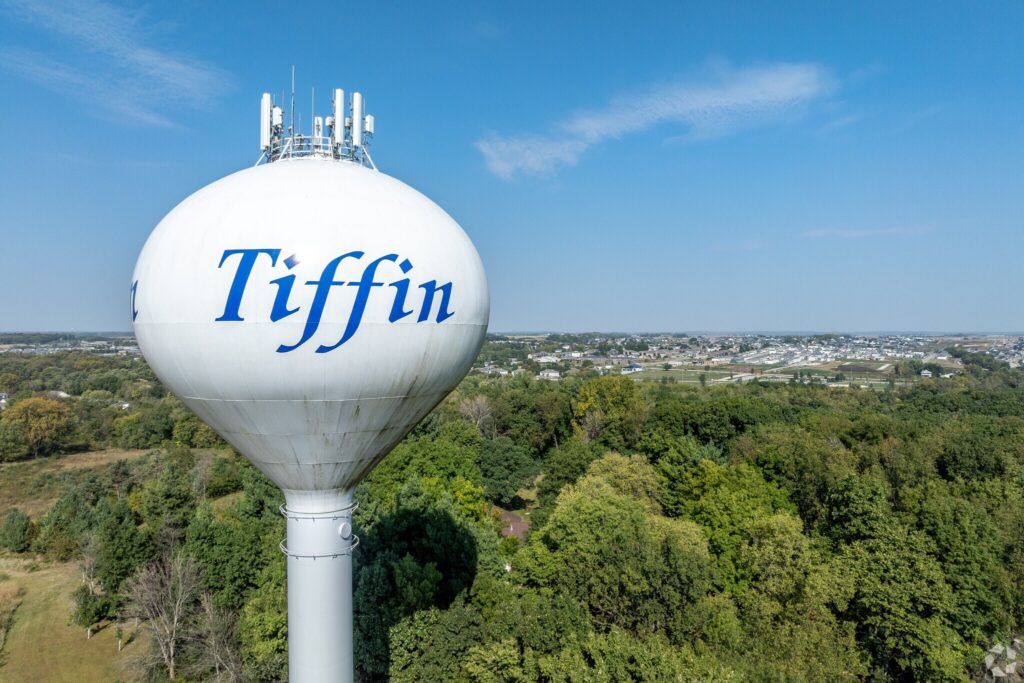
Tiffin wears the crown as the fastest-growing city in the metro, and that explosive development is driving a massive need for diverse housing options.
The city hasn’t published a dedicated ADU ordinance page yet, which likely means the city is still working through local rules in response to the state law.
Here’s what we do know: all permits in Tiffin go through an online portal, and the building department handles everything from new residential construction to accessory structures.
For ADU-specific questions, Brian Shay (Building Official) is the best contact.
Contact: Tiffin Building Department; 319-545-2572
Solon
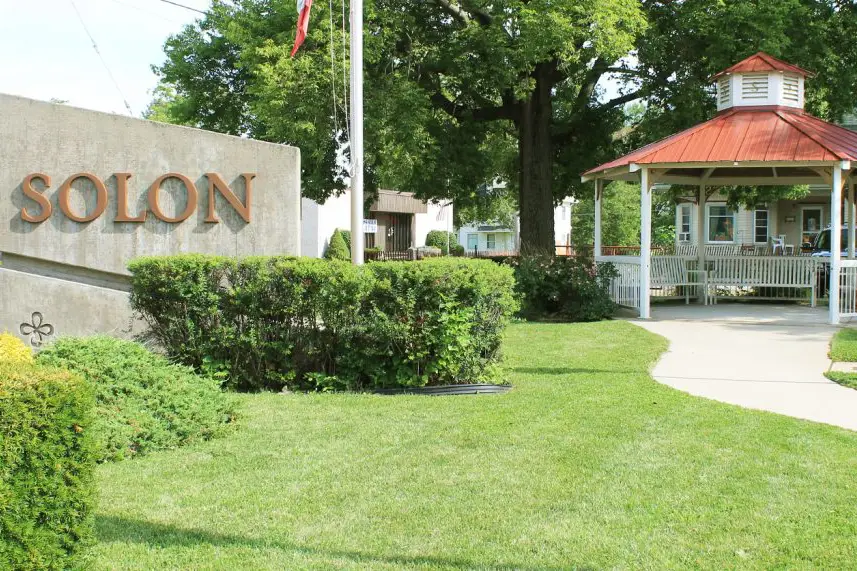
Of the five cities covered here, Solon has the least publicly available information about ADU rules. Though the city’s zoning code includes a definition for ‘accessory dwelling unit,’ development standards specific to ADUs haven’t been published in accessible sources.
According to Solon’s building permit process, you can submit an online or paper permit application. The city typically processes applications within 7-10 working days once all materials are submitted.
For ADU-specific questions about zoning eligibility, setbacks, and what your application should include, contact City Hall before going any further.
Contact: City of Solon City Hall; 319-624-3755; solon-iowa.com
What Does It Cost to Build an ADU in Iowa?
ADU costs vary based on type, size, site conditions, and finish levels. We pulled the ranges below from regional and national sources, but you’ll want to get local contractor quotes before you finalize your budget.
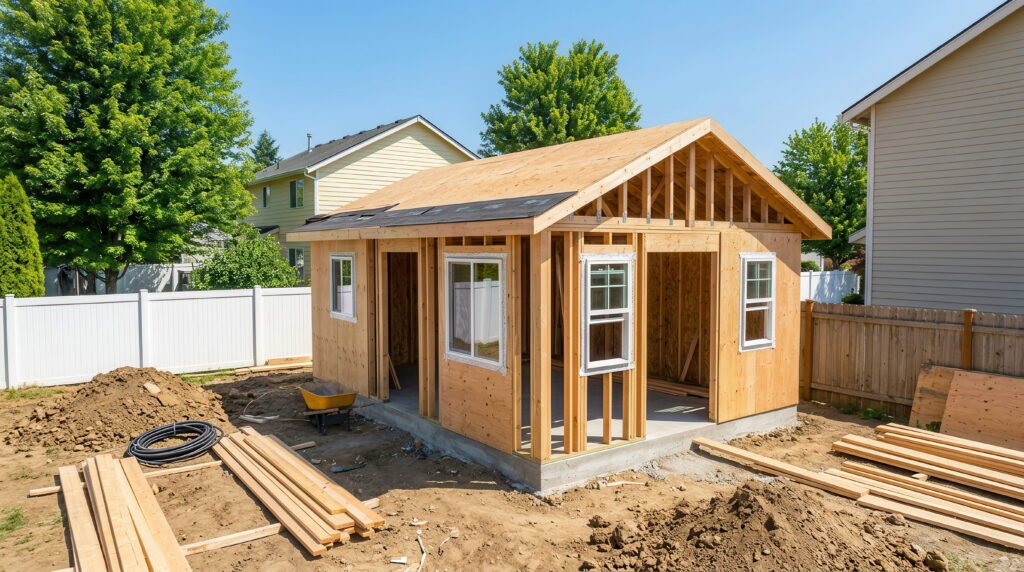
The single biggest variable is what you’re building. A garage conversion keeps costs down because the infrastructure is already there. Detached new construction is priced the highest since you’re starting with a blank lot and adding to it.
Here’s a rough breakdown by type:
- Garage conversion: $80K – $150K+
- Interior/basement conversions: $20K – $185K+ depending on existing conditions
- Attached ADU: $90K – $220K+
- Detached new construction: $110K – $250K+ (projects in the Iowa City area trend toward the higher end of this range due to labor demand and utility connection costs)
For context, the national average across all ADU types is around $180,000, with a broad range of $40,000 to $360,000 depending on the project. Iowa tracks below coastal markets by cost per square foot.
And don’t forget about the other costs:
- Permit fees vary by city, but budgeting for $1,000 to $5,000 is a reasonable starting point. Johnson County has a permit fee calculator that can help you estimate your costs.
- Architectural plans typically cost between $2,000 and $15,000+, depending on the complexity (custom or pre-designed).
- Utility hookup and connection fees, which vary depending on whether you’re connecting to existing lines or running new ones.
HELOCs and home equity loans are the most common ways homeowners fund ADU projects. It’s worth having that conversation with your lender early in the process and shopping around. Some lenders are more open to ADU projects.
How to Research ADU Rules for Your Property
1. Find your zoning classification.
Most cities publish their zoning maps online. Look up your address and note how your property is zoned. ADU rules can vary by zone, even within the same city.
2. Search your city’s municipal code.
Most Iowa cities publish their full code online. Search for ‘accessory dwelling unit’ or ‘ADU.’ If nothing comes up, your city may still be updating its ordinance post-SF 592.
3. Look for a standalone ADU guide or checklist.
Some cities, like Iowa City, publish a separate ADU handout or FAQ through their planning or building department. These are often more user-friendly than the municipal code and more current.
4. When you contact the building department, ask the right questions.
- Is my property eligible for an ADU under current zoning?
- What are the setback requirements for my zone?
- What does the permit application require (site plan, utility documentation, survey)?
- How long does a permit review take?
- Are there any design standards or review processes I need to plan for?
- Have you updated your ADU ordinance to reflect SF 592?
5. Review your HOA documents.
If you live in a community with an HOA, pull out your CC&Rs and Bylaws. Your HOA may allow ADUs, restrict them, or have specific requirements that go beyond what the city mandates.
6. Start the financing conversation early.
If you’re planning to use a HELOC or home equity loan, talk to your lender before you’re deep in the planning process. What you can borrow will shape the decisions you make.
A Note on Timing
ADU ordinances across Iowa are still evolving. Cities have had less than a year to update local codes in response to the law change, and many are still in progress. The rules in your city today may look different six months from now, and more than likely, they’ll become clearer and more formalized.
Considering an ADU as part of your next move? We know the local market and would love to help you weigh the possibilities. Reach out to our team!
And if you want to go back to the basics on Iowa’s ADU law, check out our original post on the Iowa ADU law changes.